
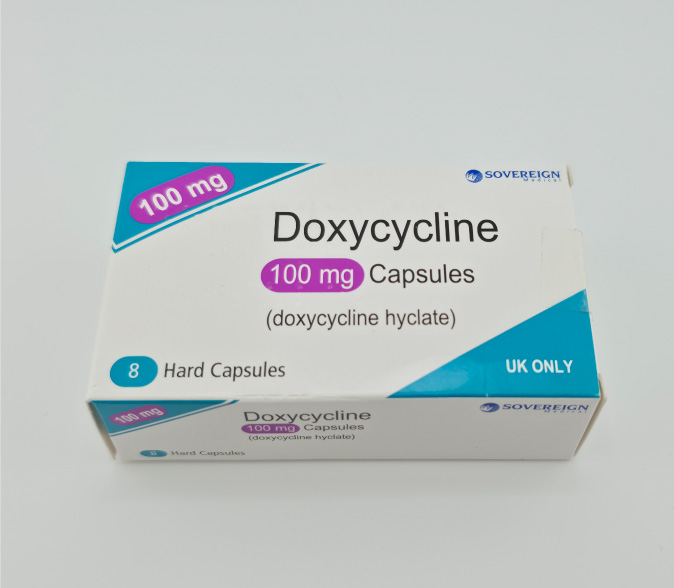

Doxycycline is a broad-spectrum tetracycline antibiotic commonly used for a variety of bacterial infections. It is also used as an effective prophylaxis for malaria prevention.
Doxycycline interferes with the growth of the malaria parasite. As a result, the malaria parasite can’t spread and multiply, which helps your immune system fight off the parasites which have made it into your bloodstream.
As it does not affect the liver, Doxycycline must be taken after exposure to clear any parasites that emerge from the liver.
Doxycycline is a prescription medication and you can’t buy it over the counter. However, you can request Doxycycline for Malaria Prophylaxis through our GPHC registered online pharmacy.
Simply complete a discreet online consultation and select the number of tablets you require to checkout and pay securely online.
Our prescriber will review your order and if approved will issue a prescription. Our pharmacy will dispense your medication and send it to any UK address. Your order will usually arrive the next working day.
How many Doxycycline capsules do I need for Malaria Prophylaxis?
This depends on how long you are traveling to a Malaria-endemic area. 28 days. Malaria prophylaxis should commence 24 or 48 hours prior to entering a malaria- endemic area and continue during the period of the stay. Prophylaxis should continue for 28 days after leaving the area. So for a one week travel to a malaria endemic area, you will need 37 capsules (2+7+28)
What other precautions should I take?
Doxycycline is a highly effective medication for malaria prevention, but no treatment can guarantee complete protection. It’s essential to also take bite-prevention measures, such as using an insect repellent containing at least 20% DEET and sleeping under insecticide-treated bed nets.
If you develop any symptoms of malaria during or after your travels—even if you’ve been taking antimalarial tablets—you must seek urgent medical attention.
Alcohol can interact with doxycycline and may reduce its effectiveness. For this reason, it’s recommended to avoid alcohol while undergoing treatment.
If you choose to drink, it’s important to limit your alcohol intake to reduce the risk of reduced treatment efficacy.
What are the symptoms of malaria?
Malaria symptoms can differ based on the specific parasite involved and the individual’s response, but they typically appear 7 to 30 days after being bitten by an infected mosquito.
The most common symptoms include:
- Fever and chills (often occurring in cycles)
- Headache
- Muscle aches and joint pain
- Fatigue and general weakness
- Excessive sweating
- Nausea and vomiting
- Loss of appetite
Taking other medications with Doxycycline
The effectiveness of doxycycline can be reduced if taken with products that contain calcium, magnesium, or iron. These ingredients are commonly found in:
- Antacids (used for indigestion or ulcers)
- Medications for constipation
- Multivitamins and dietary supplements
To ensure proper absorption, you should allow at least 3 hours between taking doxycycline and any of the above medications.
Who cannot take Doxycycline?
If you have ever had an allergic reaction to an antibiotic, or if you are pregnant, trying to conceive, or breastfeeding you may not be able to take doxycycline
Doxycycline may also not be appropriate if you:
- Are likely to be exposed to strong sunlight or ultraviolet (UV) light
- Have liver problems or are taking other medications that affect liver function
- Have severe kidney problems
- Have a condition called myasthenia gravis
- Have porphyria, a rare blood disorder
- Have systemic lupus erythematosus (SLE)
- Have sucrose intolerance