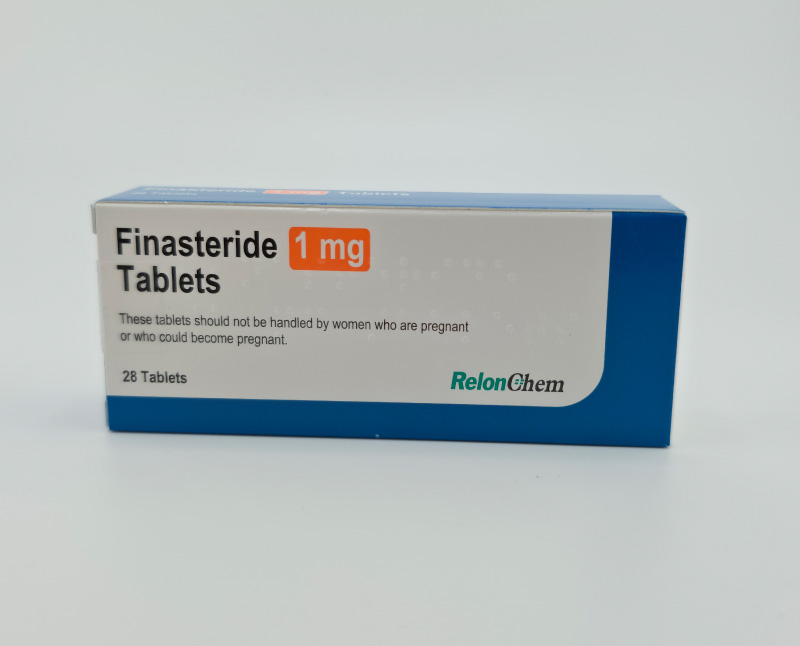
Finasteride is a Clinically proven and licenced UK medical treatment for Male Pattern Hair Loss
Treating hair loss early is important as once hair loss has occurred over a long period of time, it can be lost permanently
What is male pattern hair loss?
Hair loss in men is very common effecting an estimated 6.5 million men in the UK. Male pattern hair loss is the most common form of hair loss in men resulting in thinning of the hair on the scalp and can lead to visible signs like a receding hairline and/or balding on the top of the head. It is thought to be caused by a combination of genetic factors and a particular hormone called DHT (dihydrotestosterone).
How can DHT cause hair loss?
Before we look at how DHT can cause hair loss, we need to review how hair grows on our head
Hair grows from hair follicles which are located under the skin. Hair grows around half an inch each month. A single hair on the scalp goes through a cycle continuously growing for 2-4 years (known as the growth phase) and then stops growing for 2-4 months (known as the rest phase). The hair then falls out and a new healthy hair will grow repeating the growth and rest phase cycle again. Each single hair on your scalp will be at different stages of this cycle and therefore you lose hair each day, which is perfectly normal and nothing to be concerned about. In fact, we lose between 50 and 100 hairs each day without any noticeable change.
DHT can affect the growth phase of this cycle, decreasing hair growth which leads to thinning of the hair and causes the visual signs seen in male pattern baldness. Sometimes, this can start in your late teens or early twenties and becomes more common with age. It is important to treat male pattern baldness early as once hair loss has occurred over a long period of time, the hair may be permanently lost
You should take Finasteride 1mg tablet each day
How does Propecia (Finasteride) work?
Propecia contains the active ingredient Finasteride. It works by inhibiting an enzyme called 5-alpha reductase which usually converts testosterone to DHT. By stopping this conversion, it lowers the of DHT in the scalp and reverses the balding process, leading to an increased hair growth and prevention of further hair loss
90% of people that have taken Finasteride have seen either increased hair growth or prevention of further hair loss.
How long does it take for me to notice results?
It may take 3 to 6 months for the full effect to develop, however in some men, it can take up to a year to see the full benefit. It is important to keep taking Finasteride ass if you stop taking it, you are likely to lose the hair you have gained within 9 to 12 months.
If you haven’t noticed any benefit from taking Finasteride for a year it is unlikely to benefit you so it is recommended to discontinue treatment.
What is the difference between Propecia and Generic Finasteride?
The short answer is Nothing. Propecia and Generic Finasteride are medically identically as they both contain the same active medicine which reduces DHT levels and so will have exactly the same effect. The only difference is the price.
Propecia is manufactured by Merck Sharp & Dohme, who had the original patent on the medicine and so were the only manufacture allowed to sell this medication. When this patent came to an end, other pharmaceutical companies were able to manufacture this medicine and offer it it at a much lower price for consumers.
Finasteride is generally well tolerated however some uncommon side effects may include:
- Decrease in libido (sex drive)
- Erectile dysfunction
Other side effects may include:
- Palpitations (feeling your heartbeat)
- Pain in the testicles
- Anxiety
In rare cases Finasteride can cause depression (feeling of severe sadness and unworthiness). It is also associated with a small increased risk of male breast cancer or infertility, however the link between this and the medication is unclear. For this reason you should report any changes in breast tissue to your doctor immediately (anything like lumps, pain, enlargement or nipple discharge) and stop taking the medication if you experience symptoms of depression.
If you ever have a blood test to test for Prostate Specific Antigen (PSA Test), a screening test for Prostate Cancer, then you must tell your doctor that you are taking this medication as it can affect the result of this test.